 Faruk Ur Rahman
Server-side tracking: what it fixes and what it doesn’t
“Move to server-side and your tracking problems go away.” I hear this a lot, usually from someone who just bought a Stape plan.
Server-side tracking is the biggest upgrade most stores can make. But it fixes some things and leaves others exactly as they were. Here is the honest split, from the setups I've built and the ones I've been hired to repair.
How it works, in one paragraph
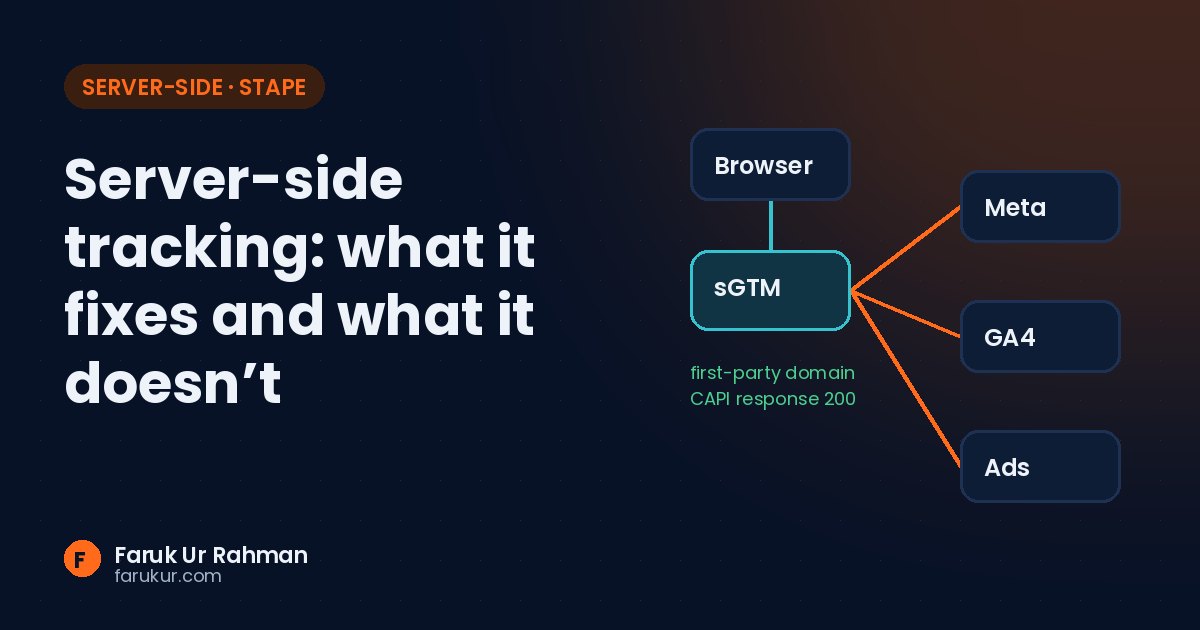
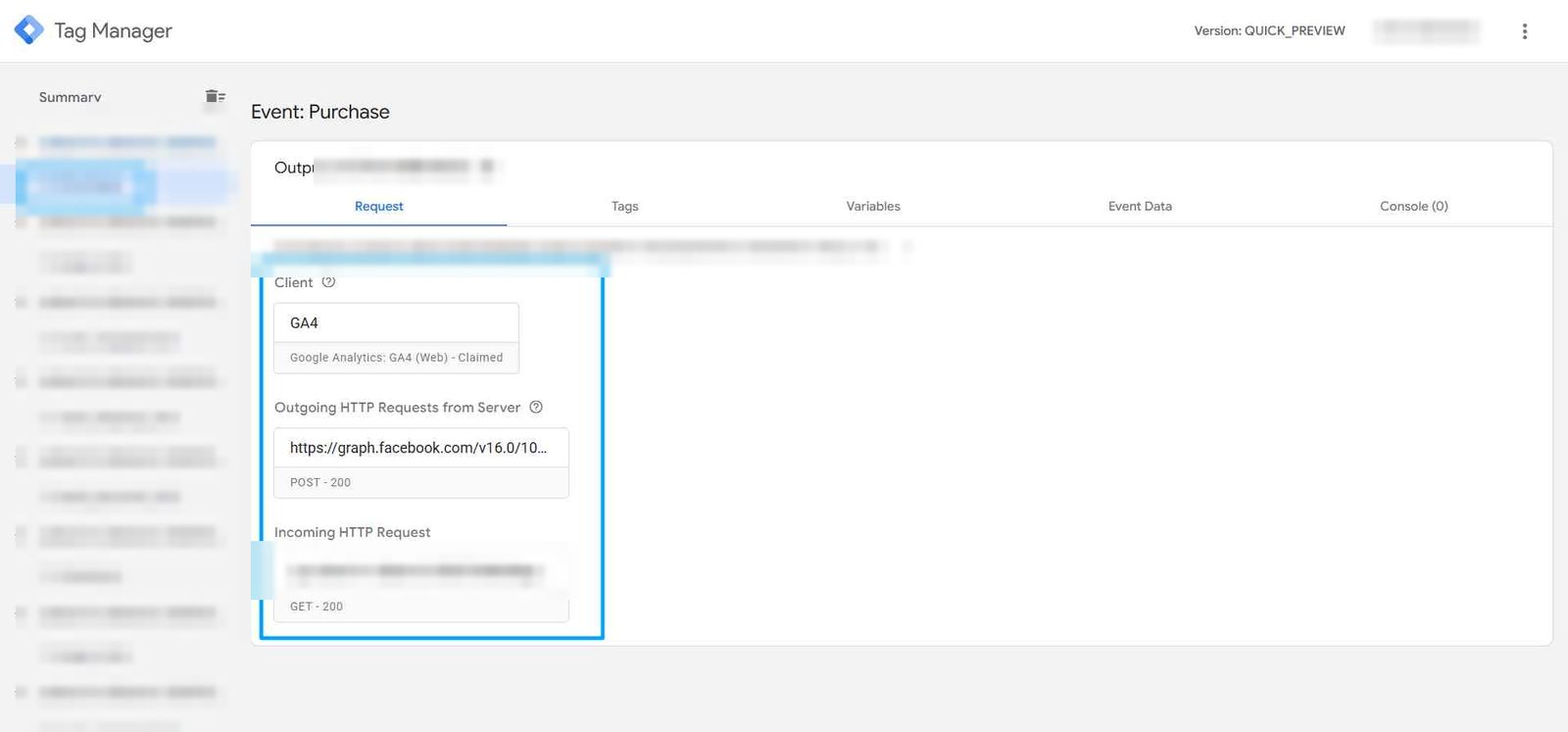
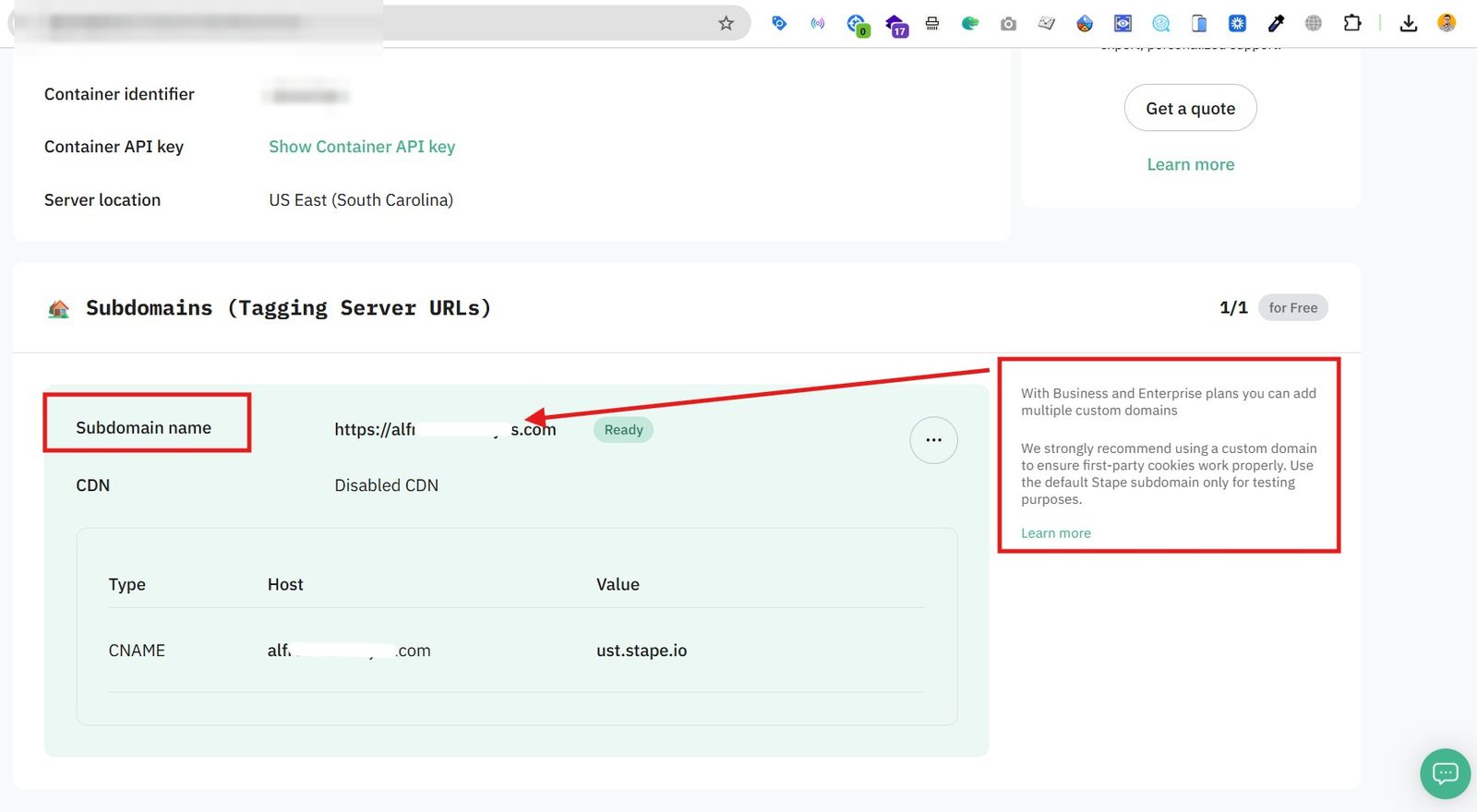
Your website still has a GTM container. Instead of every tag calling Meta, Google and TikTok from the visitor's browser, the browser sends one stream of events to your own server container (hosted on Stape or TAGGRS, on a subdomain like data.yourstore.com). The server container then forwards each event to Meta CAPI, GA4 and Google Ads.
What it fixes
Events lost to ad blockers and browser privacy
Requests to your own subdomain are much less likely to be blocked than requests to facebook.com or google-analytics.com. That alone usually brings back a share of purchases the browser pixel was missing.
Short cookie lifetimes
Safari caps cookies written by JavaScript at 7 days. A properly configured first-party tagging server can set cookies like _fbp and _ga from the server instead, so returning visitors are still recognised.
Better match quality
The server can attach hashed email, phone and address to every event. That is what pushes Event Match Quality from the 6s into the 9s.
What it doesn't fix
- A wrong data layer. If your purchase event sends the wrong value or fires twice, the server forwards the same wrong data, just more reliably.
- Deduplication. Running Pixel and CAPI together still needs the same
event_idon both, or Meta counts the order twice. - Consent. If a visitor declines tracking, the server container must respect that too. Server-side is not a way around consent.
- Attribution differences. Meta, GA4 and your store will still report differently because they attribute differently. The goal is to explain the gap, not erase it.
A quick checklist before you go live
- Tagging server on your own subdomain, not the default Stape URL
- Purchase value and currency match the order total
- Same event_id on browser and server events
- Hashed customer data on Purchase, Lead and checkout events
- Test events in Meta Events Manager show “Deduplicated”
- Consent Mode signals passed through
Short version: server-side tracking makes good data more complete. It does not make bad data correct. Fix the data layer first, then move it server-side.